Why Your Proxy Speed Directly Affects Your Indexing Rate

Examining Hosting Hardware in the tech sector
Browse engine optimization automation in 2026 has shifted far from simple script execution towards resource-heavy data processing. Software Application like GSA Search Engine Ranker (SER) now requires substantial hardware overhead to handle the huge verification and submission loads common in the existing market. Picking between a Virtual Private Server (VPS) and a Bare Metal server is no longer simply a matter of rate. It is a choice that dictates the speed of link placement and the stability of the entire SEO operation.
Automated tools function by running thousands of synchronised threads. Each thread performs a particular job, such as bring a webpage, fixing a captcha, or sending a post. In 2026, the complexity of website security suggests these jobs take more processing power than in previous years. While a VPS uses a managed environment, it often shares physical hardware with other users, leading to irregular efficiency throughout peak hours. Bare metal servers offer direct access to the processor, which prevents the micro-stuttering that often pesters virtualized environments.
VPS Efficiency Benchmarks for SEO in modern marketing
A VPS remains a popular entry point for lots of wanting to automate their link building. These servers use virtualization software to divide a single physical maker into numerous separated environments. For those running light setups with 50 to 100 threads, a high-end VPS is typically enough. The limitation of the vCPU (virtual CPU) becomes evident when the thread count surpasses 200. In these circumstances, the hypervisor that handles the virtual devices presents latency.
When screening GSA SER on a basic 2026 VPS setup with 8 vCPUs and 32GB of RAM, submission rates frequently peak and then dip. This disparity occurs due to the fact that of "noisy neighbors" on the exact same physical host. If another user on that machine starts a heavy data-mining job, your SEO software loses priority for CPU cycles. Services that scale via Asia Virtual Solutions Metrics find that VPS nodes typically have problem with high thread counts, resulting in timed-out connections and stopped working submissions. This leads to a lower success-to-failure ratio, which increases the total cost per link gotten.
Storage speed is another element. The majority of VPS companies in 2026 use shared NVMe storage. While quickly, the IOPS (Input/Output Operations Per Second) are capped to guarantee reasonable use across the platform. GSA SER writes to its internal database continuously. If the storage latency spikes, the software hangs. This lag is frequently short, but it builds up over a 24-hour duration, possibly decreasing the overall variety of processed confirmed links by 15% or more compared to a dedicated environment.
Bare Metal Power and Thread Management
Bare metal servers represent the leading tier of efficiency for SEO automation. These are physical machines where every bit of hardware is committed to a single user. For a power user in 2026, a bare metal setup with a 16-core or 32-core processor permits GSA SER to run at 500 to 1,000 threads without breaking a sweat. The lack of a virtualization layer implies the software application communicates straight with the hardware, decreasing the time invested awaiting CPU guidelines to perform.
In a head-to-head test, a bare metal server with 64GB of DDR6 RAM revealed a 40% increase in validated link placements over a likewise specced VPS. This efficiency space is largely due to memory bandwidth. SEO automation software counts on big website lists and real-time database lookups. Bare metal environments offer the full bandwidth of the RAM channels to the application, avoiding the memory traffic jams that happen when a hypervisor manages multiple virtual circumstances. Investment in Asia Virtual Solutions Metrics requires a stable backend, and devoted hardware makes sure that high-speed proxies are not squandered on a lagging processor.
Database Stability in the local market
Handling big "international websites lists" in GSA SER is a heavy job. These lists can consist of millions of URLs that the software application must arrange, validate, and deduplicate. On a VPS, the consistent reading and writing of these lists to the disk frequently sets off resource throttling. Bare metal servers typically include local, non-shared Gen6 NVMe drives. These drives provide read speeds exceeding 12,000 MB/s in 2026, allowing the software to scan through massive lists nearly instantly.
Dependability is another factor. Due to the fact that there is no hypervisor, there is one less layer of software application that can stop working. For an SEO campaign running 24/7, uptime is the most crucial metric. If a VPS host experiences a kernel panic on the main node, every virtual device goes down. With bare metal, the hardware is yours to manage. This level of seclusion is chosen by experts who handle high-authority link campaigns where any downtime results in lost ranking momentum.
Resource Optimization for GSA SER in 2026
Optimizing GSA SER efficiency involves more than simply tossing hardware at the issue. Even on a bare metal server, poor setup can result in mediocre outcomes. The software application requires to be tuned to match the offered cores. In 2026, the majority of CPUs utilize a mix of performance and performance cores. Setting the software to affinity-lock to the efficiency cores can yield a 10% boost in submission speed. This makes sure that background jobs like Windows updates or proxy checks remain on the efficiency cores while the heavy lifting remains on the main silicon.

Memory management is equally important. GSA SER is a 32-bit application in its core reasoning, though it has been updated to deal with 64-bit addresses for larger memory swimming pools. Setting the software to use a RAM disk for short-lived files can substantially reduce the wear on NVMe drives while increasing the speed of captcha processing. When the software does not need to wait for the disk to clear its cache, it can preserve a stable flow of submissions throughout the day.
- CPU Threads: Match thread count to 2x the physical core count for ideal balance.
- Proxy Latency: Use devoted proxies with a latency of less than 50ms to prevent thread hanging.
- Website List Management: Regularly prune dead sites to keep database questions quickly.
- OS Optimization: Disable unneeded Windows 2026 services like telemetry to maximize CPU cycles.
Expense Analysis: VPS vs Bare Metal in the industry
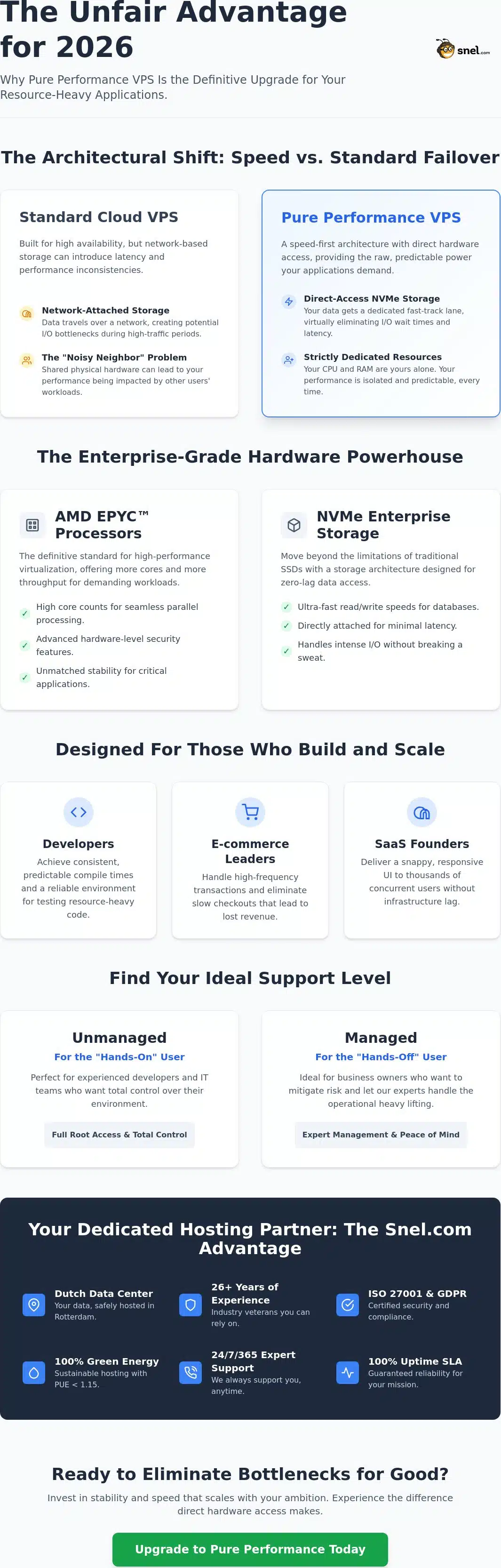
The cost-to-performance ratio is where the decision ends up being complex. A high-spec VPS in 2026 may cost $80 each month, while a mid-range bare metal server begins at $180. For a casual user running a couple of tasks, the VPS is the more sensible option. The overhead of a devoted machine is only warranted when the volume of links validates the cost. Numerous users find that one bare metal server can change three or 4 high-end VPS instances.
When running 4 GSA SER instances on 4 different VPS nodes, you are paying for the overhead of 4 operating systems and 4 sets of virtualization fees. Combining those jobs onto a single bare metal server often results in better efficiency at a lower overall monthly cost. The time conserved in handling one maker rather of four is a surprise advantage that lots of firm owners overlook. Central management leads to fewer mistakes in job configuration and easier backup treatments.
Scaling Automation in various regions
Scaling up normally occurs in phases. Most begin with a VPS and transfer to bare metal once their site lists grow beyond 5GB. At this size, the database overhead ends up being excessive for a virtualized environment to handle efficiently. In 2026, the data-heavy nature of search engine algorithms means that the volume of content required to move the needle is higher than ever. To keep up with rivals, SEO professionals must be able to release thousands of links each week across different platforms.
Bare metal servers likewise permit much better integration with other tools. Many users run GSA SER along with indexing services and captcha solvers on the exact same maker. In a VPS, this "stacking" of applications rapidly consumes the limited vCPU resources, causing all programs to crash. On a devoted device, you can allocate specific cores to the captcha solver and others to the submission engine. This guarantees that even when the solver is under heavy load, the submission engine continues to run smoothly.
Network Bandwidth and Port Speeds
An aspect often disregarded is the network port. In 2026, a 10Gbps port is basic on most bare metal servers, whereas numerous VPS suppliers still throttle users at 1Gbps or perhaps 500Mbps. GSA SER is not simply a CPU-intensive tool; it is a network-intensive one. When running 1,000 threads, the software application is making thousands of synchronised requests to various IPs. If the network port is saturated or the packet-per-second (PPS) limit is reached, the success rate drops.
Dedicated servers offer a clean pipeline with high PPS limitations. This is vital for "kitchen sink" campaigns where the software is scraping and publishing at the very same time. Scraper threads consume a great deal of bandwidth by downloading entire page sources to discover targets. If the network becomes a traffic jam, the CPU sits idle while waiting on data to show up. Professionals in the tech industry prefer bare metal for this exact factor. The network stability permits a consistent stream of information that keeps the CPU cores totally engaged.
Reputable connection likewise improves the performance of API-based services. Captcha resolving services and indexing APIs react faster when the server's network is not slowed down by other virtual machines. Every millisecond saved in these communications accumulates. Over thousands of submissions, these small gains lead to numerous extra confirmed links every hour.
Final Factors To Consider for 2026 SEO Methods
The option between VPS and bare metal depends upon the scale of the operation and the specific goals of the campaign. For testing brand-new methods or running small niche sites, a VPS provides the versatility and low expense needed to experiment. It enables quick deployment and simple pictures if a configuration fails. Nevertheless, for those looking to control competitive niches where link volume is a main aspect, bare metal is the only viable course.
Technical efficiency in 2026 is the foundation of any successful automatic SEO strategy. As online search engine end up being more adept at recognizing low-grade patterns, the speed and quality of link positioning end up being more crucial. Using dedicated resources guarantees that your software application can handle the extensive needs of modern-day web protocols without stopping working. By selecting the right hardware and optimizing it for thread effectiveness, SEO experts can maintain a substantial edge over those still counting on oversubscribed virtual environments.