Which Server Configuration Offers the most affordable Latency for Automation?

High-Speed Captcha Processing in 2026
Performance in automated link building depends upon the speed at which a system can bypass security difficulties. As online search engine and platforms implement increasingly complex verification techniques, the time required to solve a captcha ends up being a significant bottleneck for software like GSA Online search engine Ranker (SER) In 2026, the hold-up between a software application request and a successful fix-- frequently referred to as latency-- can figure out whether a project prospers or stalls. High latency leads to timed-out connections, skipped submission chances, and lowered thread efficiency.To reduce these hold-ups, practitioners are moving away from standard shared environments. When several users draw from the very same pool of resources, the action time of a captcha-solving service varies. This inconsistency forces GSA SER to wait, leaving active threads idle. Optimization in 2026 includes a shift towards dedicated resources, guaranteeing that the processing power needed for image acknowledgment or logic-based challenges is constantly readily available without competitors.
Hardware Restraints and Local Solver Performance
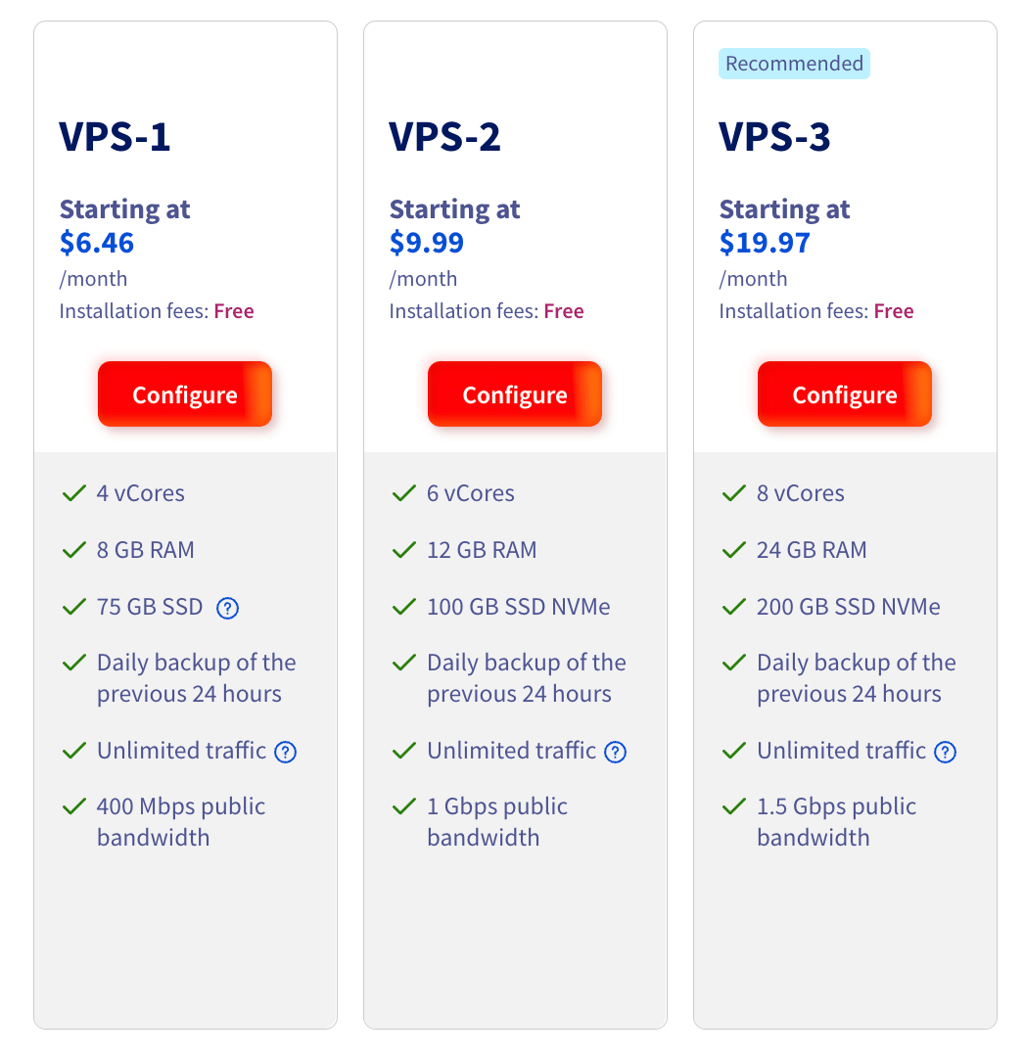
Running a regional solver along with GSA SER requires a specific hardware setup. Numerous setups stop working due to the fact that the processor can not manage the simultaneous demands of scraping, publishing, and resolving. By 2026, image-heavy captchas need substantial mathematical estimation. If the CPU is pegged at one hundred percent, the solver can not return an outcome quickly enough for GSA SER to use it. This produces a backlog of pending demands that ultimately expire.Dedicated servers for captcha fixing have become a standard service. Separating the fixing software application from the submission software application avoids resource contention. When a devoted device handles the OCR (Optical Character Acknowledgment) tasks, GSA SER can maintain its maximum thread count without stuttering. Professionals frequently find that buying Asia Virtual Solutions Asia VPS minimizes the time spent on manual confirmation and increases the total volume of effective submissions.
The Effect of Network RTT on Submission Success
Round-trip time (RTT) refers to the duration it takes for an information packet to go from the automation software to the resolving service and back. In the context of GSA SER, every millisecond counts. If a solver lies on a different continent than the submission server, the physical range introduces a mandatory hold-up that no amount of software optimization can fix.In 2026, clever routing and localized server clusters are used to combat this. Positioning the captcha solver in the same information center as the GSA SER circumstances can bring latency to sub-ten-millisecond levels. This near-instant communication guarantees that the captcha outcome is readily available nearly the minute the software comes across a barrier. Lowering the network hops between these 2 points is among the most efficient ways to enhance efficiency.
Optimizing GSA SER Internal Settings
Software application configuration plays an enormous function in how latency is managed. GSA SER enables several captcha services to be utilized in a specific order of concern. If a devoted regional solver is the very first choice, however it is sluggish, the software application waits for a timeout before moving to the next service. Lowering these timeout limits in 2026 forces the software to move on quicker if a resource is lagging.Setting a low retry limitation also helps. Instead of trying a single hard captcha 5 times, which can take a number of minutes, the software can be configured to skip and transfer to the next target. This keeps the thread pool active. Reliable implementation of Asia Virtual Solutions Budget Windows VPS deals substantial benefits by guaranteeing that the most responsive services are always at the top of the queue. Keeping an eye on the "Fix Time" column in the software interface provides the data required to prune slow-performing resources.
Advanced Proxy Combination and Connection Stability
Proxies are the bridge in between the automation hub and the target website. If the proxies are sluggish, the captcha itself takes longer to fill. This adds to the overall latency. By 2026, making use of high-speed residential or personal data center proxies is required to keep the speed of modern-day SEO campaigns. Shared proxies typically suffer from "loud next-door neighbor" syndrome, where other users' traffic decreases the connection.When a proxy is sluggish, the captcha image or script may partially load, triggering the solver to stop working or take longer to analyze the data. Utilizing dedicated proxies with 10Gbps uplinks guarantees that the data transfer part of the captcha procedure is never ever the weak spot. Regular screening of proxy reaction times assists in recognizing which suppliers are currently offering the lowest latency for particular geographic regions.
The Advancement of AI-Based Acknowledgment in 2026
AI has actually altered the way captchas are fixed, moving from simple text acknowledgment to complicated pattern matching. In 2026, solvers usage specialized neural networks that can recognize objects, fix puzzles, and even mimic human mouse movements. These AI models need substantial memory and processing speed. Utilizing a devoted GPU for these tasks can fix a complicated captcha in under a 2nd, compared to numerous seconds on a standard CPU.The software utilized to handle these AI solvers should be upgraded often. Older variations of solving software application may utilize inefficient algorithms that do not take advantage of contemporary instruction sets in 2026 processors. Keeping the solver upgraded makes sure that the recognition speed remains high. It also guarantees compatibility with the current captcha variations, which are created to prevent older, slower AI designs.
Managing Thread Counts for Maximum Throughput
There is a typical misconception that more threads constantly equate to more links. However, if the captcha-solving resource can not keep up, increasing threads actually reduces performance. When GSA SER runs a lot of threads for the readily available solver capability, the queue grows, and the latency per captcha increases exponentially.A balanced method includes benchmarking the solver. If the solver can manage 50 captchas per minute, the GSA SER thread count must be adjusted so it does not go beyond that volume. This "sweet spot" guarantees that every thread that hits a captcha gets a fast answer. Preserving this balance needs continuous monitoring of the success-to-failure ratio in the software application logs.
Examining Solver Service Dependability
Not all third-party services are equivalent. Some claim low latency however experience massive spikes during peak hours. In 2026, many operators utilize load balancers to distribute captcha demands across multiple devoted service providers. By doing this, if one service experiences a downturn, the traffic instantly shifts to a faster alternative.Checking the average fix time is better than checking the best fix time. A service that sometimes fixes a captcha in 200ms but generally takes 5 seconds is less beneficial than a service that regularly solves them in 1.5 seconds. Consistency permits GSA SER to run at a steady rate, which is much better for long-term task stability.
Future-Proofing Automation Resource Management

As we look further into 2026, the pattern of decentralizing the automation process continues. Instead of one massive server, many are utilizing smaller sized, highly enhanced nodes. Each node might manage a specific niche or type of link, with dedicated captcha resources designated to each. This avoids a single failure from removing an entire operation.Reducing latency is not a one-time task but a continuous procedure of refinement. By focusing on hardware separation, network proximity, and software application prioritization, users of GSA SER can attain efficiency levels that were previously impossible. The goal is to produce a frictionless environment where the software invests more time publishing and less time waiting for a reaction from a solver.
Data Analysis and Performance Tracking
Information drives optimization. Most modern-day solving interfaces supply in-depth logs of action times and success rates. Evaluating this data weekly permits the recognition of patterns. If the latency increases on Tuesday afternoons, it might indicate a supplier concern or an arranged network bottleneck.Using this information to adjust GSA SER settings ensures the hub remains efficient. High-volume link building is a game of margins. Conserving 2 seconds on every captcha can lead to thousands of additional successful submissions over a 24-hour period. In the competitive environment of 2026, these small gains in speed are what different effective projects from those that fail to get traction. Success in high-volume link building frequently depends upon access to Asia Virtual Solutions Asia VPS for consistent captcha bypass and reduced overhead. Managing these variables with a concentrate on speed stays the most reliable strategy for any automatic SEO endeavor.